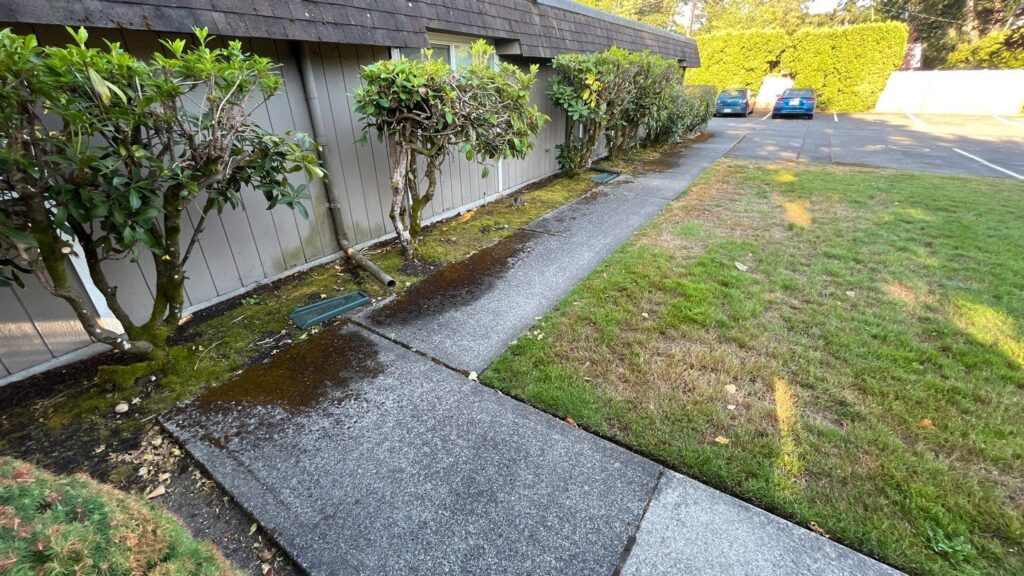
Concrete surfaces take a beating during winter in Western Washington. Months of rain, limited sunlight, and constant moisture create the perfect conditions for algae and grime to develop. By spring, driveways, sidewalks, and entryways often become slick and unsafe. Concrete cleaning safety is one of the most overlooked but important reasons to schedule exterior cleaning early in the season.
Homes in Lakewood, Steilacoom, and DuPont frequently experience algae buildup on shaded concrete areas. While the staining may seem cosmetic, the safety risks are real.
Why Concrete Becomes Slippery After Winter
Algae thrives on damp, porous surfaces. Concrete absorbs moisture during winter and dries slowly due to limited sunlight. This creates a slick film that becomes especially dangerous when wet.
Common problem areas include:
- Driveways with limited sun exposure
- Sidewalks near landscaping
- Steps and entryways
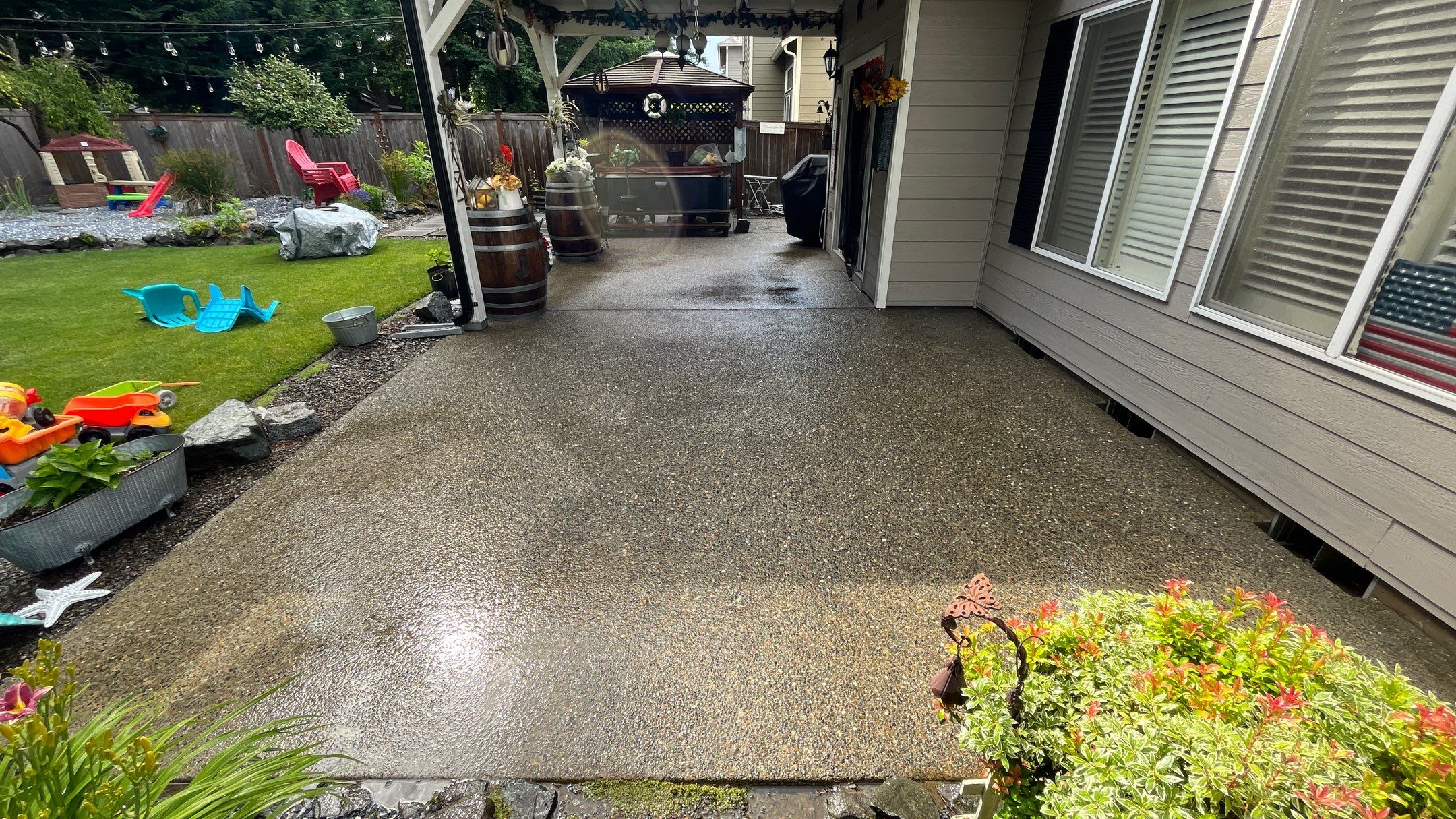
- Pool decks and patios
These surfaces may look harmless but can quickly become hazardous.
Slip and Fall Risks Around the Home
Slippery concrete increases the risk of falls for:
- Children
- Older adults
- Guests unfamiliar with the property
Falls on concrete often result in serious injuries. Cleaning surfaces to restore traction is a simple step that significantly reduces risk.
How Concrete Cleaning Improves Safety
Professional concrete cleaning removes algae and grime that cause slick surfaces. Pressure washing, when used correctly, restores texture and improves grip underfoot.
Benefits of concrete cleaning include:
- Improved traction
- Reduced algae regrowth
- Better visibility of surface condition
- Cleaner, safer walkways
Cleaning also reveals cracks or damage that may need attention.
Why DIY Cleaning Often Misses the Problem
Rinsing concrete with a hose rarely removes algae. Scrubbing may help temporarily but often leaves residue behind. Improper pressure washing can damage concrete or leave uneven results.
Professional concrete cleaning ensures consistent results without harming the surface.
When Concrete Cleaning Should Be Scheduled
Spring is an ideal time for concrete cleaning because:
- Winter buildup is at its worst
- Outdoor foot traffic increases
- Surfaces dry more consistently
- Results last longer into summer
Early cleaning reduces the chance of algae spreading further.
How Concrete Cleaning Fits Into Exterior Maintenance
Concrete cleaning is most effective when paired with house washing and gutter cleaning. Together, these services address runoff and organic growth that contribute to algae buildup.
Schedule Concrete Cleaning for Safety
If your concrete surfaces feel slick or look stained after winter, Spruce Goose Exterior Cleaning provides professional concrete cleaning designed to improve safety and appearance.
FAQs
Is slippery concrete common in Washington?
Yes. Moisture and shade create ideal conditions for algae growth.
Does pressure washing damage concrete?
Not when proper pressure and techniques are used.
How often should concrete be cleaned?
Most homes benefit from annual concrete cleaning.